“Thanksgiving: Bringing out the best in family dysfunction since 1863.” — Anonymous
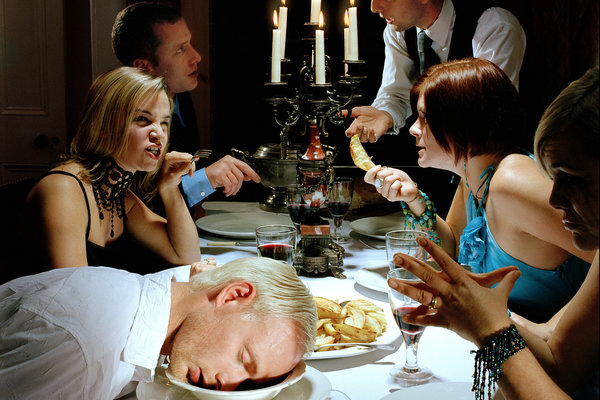
Thanksgiving: a time for family members of all ages and walks of life to unite over food and drink. Add a little too much of both, plus a heavy dose of years-long tension ready to boil over, and the holiday is often a recipe for disaster that cleaves families apart— next year, of course.
Familial dysfunction is one of the most familiar Thanksgiving tropes in the media, and for good reason: family members’ political views are growing more disparate. A 2017 Gallup poll found nearly 40 percent of Americans identify as conservative while one-fourth consider themselves liberal. The same year, 40 percent of respondents in a 2017 Huffpost/YouGov Poll said differing political views caused problems both major and minor within their family. During an era when political discourse dominates discussion, holidays are a prime battleground.
“A Thanksgiving Miracle,” Saturday Night Live (2015)
In this “Saturday Night Live” sketch, a family feud prompted by political and moral discord is thwarted by Adele, a decidedly unpolitical figure whose voice unifies the family in song despite their different values. Soon, every member of the family devolves into their own version of Adele, all donning a cozy fur, flowing hair and perfectly manicured nails. The sketch was broadcast a year before the divisive 2016 election, which likely hacked families even further at dinner tables that month, but it still resonates with viewers who dread the holiday for their relatives’ commentary. It’s necessary to reflect on what families can agree on–even if it sends them all to wigs and manicures.
Thanksgiving: A time to celebrate family dysfunction?
When relatives of different opinions reconvene, turmoil often ensues–but family dysfunction, particularly around the holidays, can be a healthy means of discourse and growth, says psychiatrist Daniela White in a 2013 USA Today piece that offers helpful hints for overcoming awkward, painful discussions during family get-togethers. New research suggests dysfunction is now an acknowledged and accepted component of the American family, in contrast with the idyllic 1950’s family model, and because of this recognition, families are more likely to accept their relatives’ beliefs even when they differ from their own.
“Face it: family love can be a very contentious thing,” said Robert Thompson, professor at Syracuse University. “It can be argumentative. If we didn’t love these people, we wouldn’t care what they were saying.”
The lesson? Family dysfunction doesn’t have to be negative, and those with a strong bond will replace argument with acceptance.
#ThanksgivingClapbacks


Leave it to Twitter to turn their painful Thanksgiving interactions into a hashtag. Users tweeted brief back-and-forths with family members who picked on them and their snippy, gutting responses, often accompanied by a gif. Former ESPN personality and current contributor to the Atlantic Jemele Hill tweeted that her aunt asked her why Hill wasn’t dating a new, “good” man. Hill’s response? “Why can’t you find a good wig?”
Twitter users capitalize on the trope that at Thanksgiving, family members sink their claws into each other’s perceived flaws and failings, whether on purpose or not, but in this scenario, Twitter users took the power back with a similarly biting retort.
“Our Favorite Shows…Our Least Favorite People”
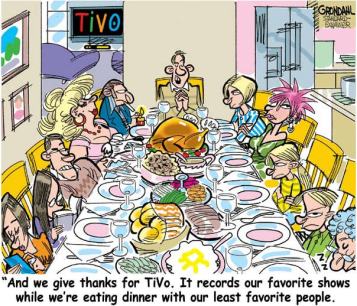
This illustration by cartoonist Cal Grondahl originally appeared in the Standard-Examiner, an Ogden, Utah, newspaper, in 2009, but its message still rings true: Thanksgiving often brings relatives together after several years of absence, which can make for an unpleasant experience that many consider a burden. For this reason, many of the fathers, uncles, husbands, grandfathers, brothers, nephews and visiting boyfriends retire to the couch to watch hours of football to avoid conversation, and others take to the kitchen or their mobile devices to avoid interacting with family members they hardly know or barely like. It’s unfortunate that the holiday has become a chore for some, considering its very existence centers around gratitude.
“Home for the Holidays”
“We don’t have to like each other; we’re family.” This line, spoken by Holly Hunter in Jodie Foster’s 1995 directorial effort “Home for the Holidays” encapsulates this exhibit: dysfunction, though inherent in every family and nearly inevitable around the holidays to some degree, but it doesn’t trump familial bond and duty. In the film, Hunter’s Claudia returns home to celebrate Thanksgiving at her parent’s home for the first time in years, and–of course–familial drama ensues. There’s her sister, whose conservative leanings, banker husband and spoiled children drive Claudia mad; her brother, whose marriage to his boyfriend is kept secret from his parents from fear of their disapproval; her daughter, who opts to spend the holiday with her boyfriend instead of her mother and lose her virginity. Throughout mishaps and spats that nearly turn physical, Claudia’s love for her relatives persists, and she learns that their disagreements do not overcome their bond as family.
Family dysfunction is as much a hallmark of Thanksgiving as turkey and mashed potatoes. But though it’s often as unavoidable as the stomach ache at the end of the holiday meal, it can provide valuable discourse that reminds relatives that blood is thicker than political opinion.

 JOU4930: Food, Media and Culture